
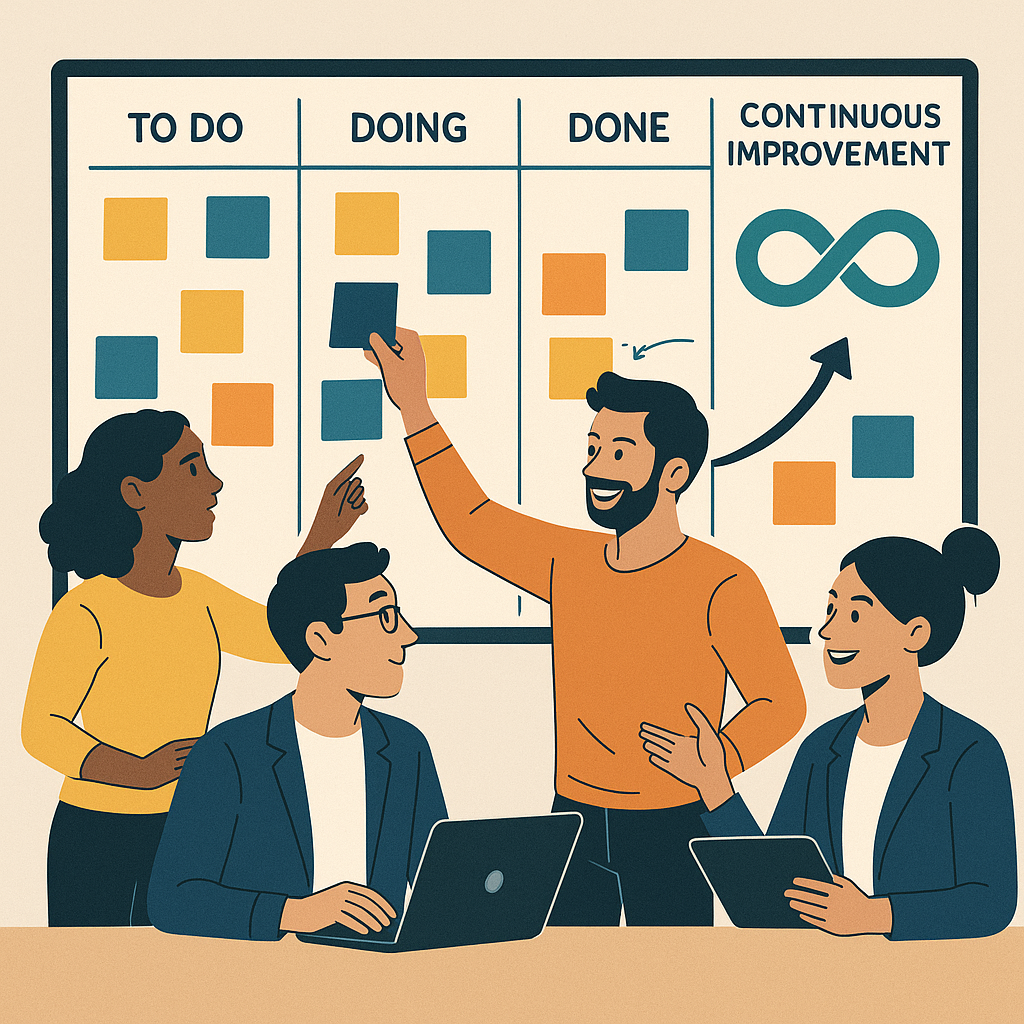
Unlock sustained organizational agility by harnessing Kaizen and continuous improvement for transformative, measurable business outcomes.
The Power of Kaizen in Enterprise Agile Transformations
Kaizen, a Japanese term meaning "change for better," is a cornerstone of both Lean and Agile methodologies. Its origins trace back to post-war manufacturing, where continuous, incremental improvement became the engine for extraordinary productivity and quality gains. Today, Kaizen is deeply embedded in Agile frameworks such as Scrum, SAFe, and Kanban, which all emphasize routine retrospectives to identify and act on improvement opportunities.
In enterprise Agile transformations, Kaizen empowers organizations to evolve beyond static process adherence toward a culture of experimentation, learning, and sustainable change. By systematically reflecting and adapting, enterprises unlock compounding gains in delivery speed, quality, and employee engagement—fueling competitive advantage in fast-paced markets.
Building a Culture of Continuous Improvement Across Teams and Portfolios
A sustainable Agile transformation requires more than periodic retrospectives at the team level. Continuous improvement must become a shared value across teams, portfolios, and leadership. This is achieved by making improvement items—actionable outputs from retrospectives—a first-class citizen in every backlog, prioritized alongside feature work and technical debt.
Effective backlogs include and track improvement items visibly, ensuring accountability and transparency. Leadership reinforces this culture by celebrating incremental wins, allocating capacity for improvement work, and embedding Kaizen into the operating model. When improvement becomes everyone’s responsibility, organizations foster resilience, adaptability, and long-term agility.
Strategic Alignment: Linking Kaizen Initiatives to Business Outcomes
For Kaizen to deliver measurable business value, improvement initiatives must align with strategic objectives. Retrospective-derived action items should connect to key business outcomes—whether that’s improved release predictability, defect reduction, or enhanced customer experience. Incorporating these items into the backlog ensures continuous improvement isn’t a side activity but a direct lever for organizational performance.
Portfolio leaders and Agile PMOs play a vital role in tracing improvement efforts to outcomes, prioritizing those that drive the highest value, and communicating impact to stakeholders. This alignment transforms Kaizen from a team ritual into a strategic enabler, supporting enterprise goals such as EBITDA growth, cost reduction, and compliance.
Overcoming Legacy Habits: Practical Tactics for Sustained Change
Despite best intentions, organizations often struggle with legacy habits—such as deprioritizing improvement work, treating retrospectives as optional, or allowing action items to languish in backlogs. Common anti-patterns include creating improvement tasks with vague acceptance criteria, failing to assign ownership, and neglecting follow-through.
To mitigate these risks, teams should: define clear, actionable improvement items; allocate explicit capacity each sprint or PI for Kaizen work; and regularly review progress. Agile coaches and transformation leads should facilitate accountability, provide actionable templates, and model effective behaviors. By making improvement visible and manageable, organizations build momentum for sustained change.
Measuring Success: Data-Driven Insights for Continuous Agile Maturity
Continuous improvement thrives when organizations measure and visualize progress. Key metrics may include the percentage of improvement items completed, cycle time to implement change, and the impact of improvements on business KPIs. Tools such as dashboards, improvement boards, and regular health checks enable data-driven conversations and transparent reporting.
By integrating metrics into Agile ceremonies and leadership reviews, organizations close the feedback loop between retrospectives, improvement efforts, and business results. This transparency not only drives accountability but also motivates teams by demonstrating tangible impact, fueling a virtuous cycle of Kaizen and Agile maturity.